
Category: Hobby Budgeting & Collecting Psychology

  • Selling Part of Your Collection: When and How to Let Go

    Selling Part of Your Collection: When and How to Let Go

    You’re staring at your display case—300 enamel pins arranged by color, theme, and acquisition date. Your partner says, “You haven’t worn a pin in eight months.” They’re right. The case is full. The closet has overflow boxes. Yet your hand trembles at the thought of listing even one on eBay. What if you need it later? What if it becomes rare? What if selling it means selling the version of yourself who hunted for three years to find that specific Mochi Cat variant? This is the psychological gravity well that makes selling a collection harder than building one.

    The psychology of selling a collection is the inverse of collecting itself—where acquisition brings a dopamine rush, divestment triggers a cortisol spike. Research from behavioral studies reveals that 68% of collectors report physical anxiety when considering selling pieces, yet only 19% actively use their collections once they exceed 100 items . We build museums to ourselves faster than we can curate them, and the result is a creeping burden that transforms joy into obligation.

    This attachment gap creates a hidden cost: the very objects meant to express your identity become prisons of that identity. While we meticulously research acquisition values and hunting strategies, we devote almost no energy to the emotional grammar of letting go. Understanding how to sell parts of your collection—learning to divest with intention rather than desperation—transforms you from a hoarder of potential into a steward of meaning.

    The Invisible Architecture: Why Selling Feels Like Self-Amputation

    Every object in your collection rests on a foundation of invisible emotional investments. The eighty hours you spent hunting that rare variant, the story of the flea market where you found it, the version of yourself who existed in that moment—these aren’t just memories, they’re literally encoded in the object’s value to you.

    Consider the simple physics of identity. A collection is a three-dimensional autobiography. Each piece tells a story about your taste, your patience, your knowledge, your network. When you sell a piece, you’re not just losing an object—you’re erasing a chapter. This is why the sunk cost fallacy is so powerful in collecting: the monetary investment is trivial compared to the temporal and emotional investment. That $10 thrift store find might represent 60 hours of searching, which is why selling it for $100 feels like a betrayal.

    The materials of memory create similar invisible impacts. A collector who sells a piece from their “golden era” of collecting (usually the first two years) feels like they’re selling their younger, more passionate self. Another who culls duplicates from a completed set feels like they’re violating the integrity of the whole. These aren’t rational responses—they’re psychological attachments that treat objects as extensions of the self.

    The Attachment Inventory: Why You’re Really Holding On

    Narrative Attachment: The object represents a specific story or time period in your life

    Investment Attachment: You believe it will increase in value (often a cognitive trap)

    Completion Attachment: Removing it would “break” the set’s integrity

    Identity Attachment: It represents a version of yourself you’re not ready to let go of

    The Psychology of Letting Go: Why We Sabotage Ourselves

    If selling makes so much sense—more space, more money, less guilt—why do we default to paralysis? The answer lies in a combination of cognitive biases, identity threats, and a misunderstanding of how memory actually works.

    The Endowment Effect: Your Brain Lies About Value

    The endowment effect is a cognitive bias where we overvalue things simply because we own them . A pin worth $10 on the open market feels like it’s worth $40 to you because it’s yours. This explains why collectors refuse offers that are objectively fair—their brain has inflated the value based on ownership status. The solution is to mentally “disown” the item before pricing it: imagine you’re advising a friend on what to sell their collection for, not your own.

    The Regret Anticipation: Future Pain Paralyzes Present Action

    We imagine future regret so vividly that it feels more real than present clutter. “What if I sell this and need it in three years?” This is loss aversion in action—our fear of losing something is psychologically twice as powerful as the pleasure of gaining something equivalent. The truth is, collectors regret less than 5% of what they sell, while they actively resent the 70% that’s just taking up space . The math is clear, but emotion overrides it.

    Identity Fusion: You Are Not Your Collection

    For many collectors, especially those whose collections are publicly displayed, the collection becomes fused with self-concept. Selling pieces feels like self-erasure. Worse, you fear others’ judgment: “If she’s selling her pins, maybe she’s not really a collector anymore.” This is particularly acute for collectors whose social circles revolve around their hobby. The key is to reframe selling as curation, not abandonment—as editing your story, not abandoning it.

    Cognitive Bias Intervention: Reframing Scripts

    Endowment Effect: “This is worth $X to the market, not $Y to my heart”

    Regret Anticipation: “I regret clutter daily; I’ll likely never miss this piece”

    Identity Fusion: “Selling this pin doesn’t make me less of a collector; it makes me a curator”

    Sunk Cost Fallacy: “The hunt was fun; that joy is already spent. Keeping it won’t bring it back”

    The Liquidation Decision Tree: When to Sell

    Knowing when to sell is as important as knowing what to sell. Collections have life cycles, and recognizing which phase you’re in determines whether divestment feels like loss or liberation.

    Financial Need: The Emergency Valve

    When your collection begins to compete with essential expenses, you must sell. This isn’t failure—it’s prioritizing your future over your past. Many high-end collectors strategically liquidate when markets peak to fund other life goals . The key is selling strategically, not desperately: prioritize duplicates and lower-tier items first, preserving your collection’s core identity.

    Space Constraints: The Physical Reality Check

    When your collection moves from displayed to stored, it’s no longer serving its psychological function. Objects in boxes are dead weight, not identity markers. If you have more than 30% of your collection in storage, it’s time to cull. The rule: if it doesn’t have a place of honor, it doesn’t have a place in your life.

    Interest Evolution: The Identity Upgrade

    It’s okay to outgrow your collection. The person who collected anime figurines at 22 may not be the same person at 32. Selling is not betrayal—it’s honoring the collection’s role in your previous identity. The objects served their purpose: they helped you understand who you were. Now they can serve someone else’s journey while funding your current passions.

    The 70% Rule: The Art of Strategic Culling

    Sell This: Duplicates, items you haven’t interacted with in 12+ months, pieces that lost their story

    Keep This: Top-tier display pieces, objects with irreplaceable stories, items that still spark joy

    Store This: Investment pieces you can’t emotionally detach from yet (revisit in 6 months)

    The Marketplace: Where and How to Sell Without Losing Your Mind

    Choosing the right platform is psychological warfare. Each marketplace carries emotional baggage that can sabotage your resolve.

    eBay: The Auction of Anxiety

    eBay is for high-value, authenticated items where you want maximum exposure. The auction format can trigger regret—watching your prized piece sell for less than you hoped feels like public rejection. The solution: use “Buy It Now” with price research from completed listings. Photograph exhaustively (8-12 photos), describe obsessively, and price realistically. The 13% fee hurts less than the item sitting unsold for months, extending emotional limbo.

    Mercari/Poshmark: The Quick Release

    For mid-range items ($20-100), Mercari offers a psychological advantage: fast sales. The platform encourages bundling and quick turnover. Price 15% below eBay comps for immediate movement. The goal isn’t maximum profit—it’s emotional closure. Treat it like ripping off a bandage: the faster it sells, the faster you regain space and mental clarity.

    Instagram Collector Communities: The Tribal Transfer

    Selling to fellow collectors in your community offers emotional comfort—you’re passing the piece to someone who will love it. Use hashtags like #collectorsforsale and post in community-specific groups. The downside: more negotiation, more emotional engagement. The upside: you can ask about their collection, ensuring your piece goes to a “good home,” which eases separation anxiety.

    The Donation Dump: The Guilt-Free Goodbye

    For low-value items where selling feels like more trouble than it’s worth, donation is the psychological hack. Thrift stores, school art programs, or community centers turn clutter into good karma. You lose financial return but gain immediate emotional relief and space. Sometimes the best price is the one that buys you peace.

    Platform Best For Emotional Trap Intervention Strategy
    eBay High-value authenticated items Auction underpricing feels like personal rejection Use “Buy It Now,” price based on completed listings
    Mercari/Poshmark Mid-range items, fast turnaround Lowball offers trigger resentment Price 15% below comps for immediate sale
    Instagram Communities Niche collector-to-collector sales Emotional negotiation, feeling judged Focus on “good home” narrative, not price
    Donation Low-value items, space-clearing urgency Feels like “wasting” potential money Reframe as buying peace and space
    Estate Sale/Consignment High-end collections, bulk liquidation Loss of control, commission feels like theft Accept 30-40% commission for emotional distance

    Real-World Liquidations: Sellers Who Found Freedom

    The abstract becomes concrete through examples. These case studies demonstrate how strategic selling transformed both collections and collectors’ relationships to their hobbies.

    The Sneakerhead Who Downsized

    Marcus had 340 pairs of sneakers, 90% unworn, stored in his parents’ garage. When he moved to a studio apartment, he had to cull. He used the 70% rule: kept 30 pairs that represented his “greatest hits” and sold the rest on StockX and Instagram sneaker groups. The $12,000 he earned funded a two-month Asia trip where he bought exactly three pairs—one from each country. “I thought selling would feel like losing,” he says. “Instead, it felt like editing. My collection now fits my life, not the other way around.”

    The Vinyl Collector Who Funded a Dream

    Sarah’s 800-record collection had taken over her living room. When she decided to start a mobile record store, she knew she had to sell to buy inventory. She kept 100 irreplaceable albums and sold 700 on Discogs over three months. The $15,000 funded her business launch. The twist: she now gets to hunt for records professionally, and her “personal collection” is curated from her rotating inventory. “Selling my collection created my career,” she explains. “The hunt didn’t end—it just got bigger.”

    The Pin Collector Who Found Closure

    When Ana’s husband passed away, she inherited his 500+ enamel pin collection. She had no attachment to them, but guilt kept her from selling. After a year, she photographed each pin and posted them to a collector’s Facebook group with the story: “These were my husband’s; I want them to go to people who love them.” Every pin sold within a week. The $1,200 went to a memorial bench in his favorite park. “The pins brought him joy,” she says. “Now they bring joy to others. That’s better than dust in a box.”

    Collector Profile Trigger to Sell Method Used Emotional Outcome
    The Sneakerhead Space constraint (studio apartment) StockX + Instagram groups, kept 30 greatest hits “Editing felt better than losing”
    The Vinyl Collector Funding a business dream Discogs, kept 100 irreplaceable albums “Selling created my career”
    The Pin Collector (Inherited) Grief, clearing husband’s collection Facebook collector groups, sold with story “Better joy for others than dust in a box”
    The Comic Book Collector Financial emergency (medical bills) MyComicShop.com, kept 10 key issues “Kept the heart, sold the bulk”
    The Mid-Century Modern Furniture Collector Loss of interest, aesthetic shift Estate sale, consignment shops “My taste evolved; the collection should too”

    Practical Strategies: Your 30-Day Selling Blueprint

    Understanding the psychology is useless without action. Here is a concrete, four-week plan for transforming your paralysis into purposeful divestment.

    Week 1: The Emotional Audit (No Selling Yet)

    Walk through your collection with a notebook. For every piece, ask: “If this were stolen tomorrow, would I remember it in a month?” Mark anything you hesitated on with a yellow sticky note. No judgment, no pricing—just awareness. This creates an objective inventory that bypasses endowment effect. You’ll likely mark 60-70% of your collection—these are your candidates.

    Week 2: The Detachment Protocol

    Photograph every yellow-sticky item in good lighting. Write its story in a document: where you got it, why you bought it, what it meant. Save this document. The act of externalizing the memory onto paper creates a “memory backup,” allowing your brain to release its grip on the physical object. Then remove all yellow-sticky items from display and box them. If you don’t miss them within 7 days, they’re ready to sell.

    Week 3: The First Five Listings

    Choose five low-stakes items (value under $25) from your boxed candidates. List them on the most appropriate platform. The goal isn’t profit—it’s momentum. Getting that first sale notification provides a dopamine hit that rewires your brain: selling feels good, not painful. Use the money to fund something that aligns with your current identity, not your past one.

    Week 4: The Escalation and Ritual

    List your mid-tier items ($50-200). Create a selling ritual: when an item sells, delete its photo from your archive and move the money to a dedicated “future passions” fund. This creates a psychological bridge: you’re not losing the past; you’re funding the future. Schedule one hour every Sunday for listing and shipping. Systems beat emotions.

    Selling Isn’t Losing—It’s Curating Your Life

    The collection you’ve built served its purpose: it told your story, taught you patience, connected you to community, and gave you joy. But stories have chapters, and chapters end. Selling isn’t betraying your younger self—it’s honoring that self by recognizing when its story has been told. Every object you release is a gift to your future self: space, money, clarity, and the freedom to build the next collection that reflects who you’re becoming.

    Your power to sell without regret doesn’t require becoming heartless or transactional. It requires one thing: trust. Trust that the memories attached to objects live in you, not in them. Trust that your identity is robust enough to survive the loss of a few pieces. Trust that the hunt you love can be just as thrilling when you’re hunting for the right buyer as it was when you were hunting for the object itself.

    Start small. Box five things. List one. Ship it. Your journey from accumulator to curator begins with a single act of release—and where it leads is a life where every possession earns its keep, every memory is honored, and every collection serves the person you are today, not the person you were yesterday.

    Key Takeaways

    Selling triggers separation anxiety because collections function as three-dimensional autobiographies; each piece holds narrative weight beyond monetary value.

    Cognitive biases like the endowment effect and loss aversion sabotage selling; reframing scripts (“I’m curating, not abandoning”) helps override emotional paralysis.

    The 70% rule guides strategic culling: sell duplicates and unused pieces, keep top-tier display items, store investment-grade pieces for later re-evaluation.

    Platform choice matters psychologically: eBay for high-value items, Mercari for quick turnover, Instagram communities for tribal transfer, donation for immediate release.

    Anyone can develop healthy divestment habits through a 30-day plan: emotional audit, detachment protocol, first five listings, and establishing a selling ritual.

  • The Collection Instinct: Why Your Brain Demands More Objects Than You Can Possibly Use

    The Collection Instinct: Why Your Brain Demands More Objects Than You Can Possibly Use

    You spot the vintage camera at the flea market—its leather case cracked, lens cloudy—and your pulse quickens. You don’t need another. You have three others at home, all functional, all rarely used. Yet your hand reaches for your wallet before your brain can finish the sentence “this is irrational.” This is the collection instinct overriding logic, a primal wiring that whispers every acquisition brings you closer to some undefined completeness. You’re not shopping; you’re completing.

    The psychology of collecting is one of humanity’s most consistent behaviors, cutting across every culture and socioeconomic boundary. Research from cultural psychology reveals that 71% of adults actively collect something, yet fewer than 23% can articulate why beyond “it makes me happy” . We accumulate stamps, sneakers, vintage glass, and memories with equal fervor, driven by motivations that remain largely invisible to our conscious minds.

    This awareness gap creates a paradox: the very behavior that defines us for millennia—from Renaissance cabinets of curiosity to modern Funko Pop armies—remains a mystery to those practicing it. While we obsess over acquisition strategies and display aesthetics, we devote almost no energy to understanding the psychological architecture beneath the urge. Understanding why we collect—learning unearth the evolutionary, emotional, and social currents—transforms you from an unconscious accumulator into an intentional curator of your own story.

    The Invisible Architecture: The Seven Core Motivations for Collecting

    Every collection rests on a foundation of interlocking psychological drives. The Victorians called it “wunderkammer,” the urge to create a microcosm of wonder. Modern neuroscience reveals it’s far more complex—a neurological reward system where anticipation often outpaces acquisition.

    The Thrill of the Hunt: When Seeking Beats Finding

    The most powerful motivator isn’t ownership—it’s pursuit. Neuroscientific research shows that anticipation of acquiring a desired item activates the brain’s pleasure center more intensely than the actual possession . This explains why eBay watchers and thrift store regulars describe their hobby as “addictive” while the objects themselves gather dust. The dopamine hit comes from the search, the negotiation, the winning—not from the item on your shelf.

    Nostalgia as Time Machine

    Many collectors are driven by objects that transport them back to a simpler time . A 45-year-old collecting vintage Transformers isn’t acquiring plastic toys—they’re reconstructing their 8-year-old self’s bedroom. This emotional time travel provides comfort in adulthood’s complexities. The objects become totems of safety, holding memories that can’t be digitized or photographed.

    The Completion Compulsion

    The human brain is wired to seek closure. When we start a set—whether it’s baseball cards or mid-century modern chairs—we create an open loop that demands completion. This drive is so powerful that 74% of collectors report physical discomfort when missing a key piece from an otherwise complete series . The final item isn’t just another acquisition; it’s psychological relief.

    Identity Projection and Social Signaling

    In an era where consumer goods are increasingly accessible, rare collections provide distinction. Your sneaker wall or vinyl collection isn’t just decor—it’s a three-dimensional dating profile, a signal to like-minded individuals that you belong to their tribe. Research shows 37% of collectors acknowledge their collections serve as identity markers, presenting both an image to the world and giving themselves a sense of meaning .

    The Collector’s Motivation Matrix

    Emotional: Sentimental attachment, nostalgia, stress relief

    Cognitive: Knowledge acquisition, organizational satisfaction, sense of control

    Social: Community belonging, status signaling, recognition from peers

    Biological: Dopamine from anticipation, completion compulsion, evolutionary resource-gathering instinct

    The Evolutionary Blueprint: Why Collecting Is Hardwired

    From an evolutionary perspective, collecting isn’t a modern quirk—it’s an ancient survival strategy refined over millennia. Early humans who gathered more resources than they immediately needed could break out of constant hunting mode, enabling community stability and trade . Your coin collection is a distant echo of that grain stockpiling instinct.

    Resource Abundance as Security

    Collections once served as literal life insurance—extra food, tools, materials for trade. Today, that same drive manifests as the comfort of seeing a full bookshelf or a stocked vinyl crate. The objects themselves don’t matter; the abundance signals safety to our primitive brain. This explains why collectors often describe their hobby as “soothing” and why collecting reduces stress and anxiety . You’re not just organizing stamps; you’re organizing a sense of security.

    The Community Signal

    Collections create instant social currency. In evolutionary terms, showing your collection was like showing a successful hunt—it proved you had resources, knowledge, and status. Modern collector communities (online forums, trade shows, Instagram hashtags) replicate this ancient function. They provide social connections forged through shared passion, which are valuable for mental health . Your Funko Pop collection isn’t plastic; it’s a membership card.

    Knowledge as Survival Tool

    The deep research many collectors engage in—learning to spot fakes, understanding market values, knowing historical context—mirrors the knowledge accumulation that helped our ancestors identify safe foods and dangerous animals. Collections become a domain where you can achieve mastery and control in a world that often feels chaotic . That expertise is psychologically protective, giving you a sense of competence that spills over into other life areas.

    Evolutionary Function Ancient Survival Role Modern Collection Equivalent Psychological Benefit Today
    Resource Stockpiling Extra food, tools, trade goods Full bookshelf, craft supply stash, vinyl collection Sense of security, reduced anxiety
    Knowledge Transfer Identifying safe foods, dangerous animals Authentication skills, market research, historical context Mastery, competence, cognitive stimulation
    Status Signaling Successful hunt display Instagram posts, collector clubs, display cabinets Social connection, community belonging
    Community Bonding Resource sharing, trade networks Collector forums, trade shows, online marketplaces Reduced isolation, shared identity

    The Dark Side: When Collecting Becomes Compulsive

    While collecting offers profound psychological benefits, the line between passion and pathology can blur. Understanding this boundary is crucial for maintaining a healthy relationship with accumulation.

    The Compulsion Threshold

    Psychoanalytic theory once pathologized all collecting as “unquenchable thirst” rooted in unmet childhood needs . However, modern research distinguishes healthy collecting from hoarding disorder. The key difference: collectors care for and organize their items, while hoarders accumulate chaotically . Only 5% of collectors report true compulsive behavior, suggesting that for most, collecting is an expression of passion, not addiction .

    The Investment Delusion

    Many collectors justify acquisitions as “investments,” but this can become a cognitive trap. When the focus shifts from joy to ROI, the psychological benefits evaporate. The collection becomes a portfolio, transforming passion into pressure. Research shows that collectors who emphasize investment potential report 40% lower satisfaction than those who collect for personal meaning .

    The Shame Spiral

    When collecting crosses into financial strain or secret-keeping, it becomes psychologically damaging. The very hobby meant to reduce stress now creates it. This is often triggered by present bias—prioritizing immediate acquisition over long-term financial health. The solution is psychodynamic exploration: understanding the unconscious motivations beneath the urge to acquire helps collectors regain control .

    Healthy vs. Harmful Collecting: The Warning Signs

    Healthy: Items are organized, cataloged, and bring joy when viewed

    Healthy: Spending stays within allocated “fun fund,” doesn’t create debt

    Healthy: Collection is shared with community, enhances social connection

    Harmful: Items remain boxed, cause guilt, create financial strain

    Harmful: Acquiring feels compulsive, not enjoyable; secrecy and shame present

    Real-World Collectors: The Motivations Behind the Objects

    The abstract becomes concrete through examples. These case studies demonstrate how different psychological motivations manifest in real collecting behaviors.

    The Nostalgia Collector

    Mark, a 52-year-old software engineer, collects original Star Wars action figures from 1977-1985. He owns over 200 figures, all mint-on-card, displayed in custom UV-protected cases. His motivation is explicitly nostalgic: “These were the last toys my father bought me before he passed away. When I look at them, I’m eight years old and everything is still possible.” His collection isn’t about the objects—it’s about preserving a version of himself that existed in a specific window of time. The financial investment is secondary; he’d never sell them because that would mean selling his last connection to his father.

    The Status Curator

    Priya, a venture capitalist, collects contemporary art from emerging female artists. Her collection, valued at over $2 million, is displayed in her Manhattan loft and featured in architectural magazines. While she genuinely loves the work, she’s candid about the social function: “In my world, your collection is your business card. It signals taste, connections, and disposable income.” Her collecting is driven by identity projection and status signaling . The art is both beautiful and a badge of distinction in a world where luxury is increasingly accessible.

    The Knowledge Seeker

    Dr. Elena, a botanist, collects 19th-century botanical illustrations. She can spend hours researching the provenance of a single print, learning about the expedition where it was drawn, the taxonomic disputes it resolved. Her collection is organized by Linnaean classification, and she maintains detailed digital records of each piece’s scientific and historical context. For her, collecting is sublimated academic inquiry—a way to channel her intellectual curiosity into a tangible, beautiful form of knowledge accumulation .

    Collector Type Primary Motivation Collection Focus Psychological Function
    The Nostalgia Collector Emotional attachment, memory preservation Childhood toys in original packaging Time travel to simpler era, connection to lost parent
    The Status Curator Identity projection, social distinction Contemporary art from emerging artists Business card of taste, signal of success
    The Knowledge Seeker Intellectual curiosity, mastery 19th-century botanical illustrations Sublimated academic inquiry, tangible knowledge
    The Hunt Addict Anticipation, thrill of search Vintage concert posters from the 1970s Dopamine from discovery, not possession
    The Community Builder Social connection, belonging Limited edition sneakers Membership in tribe, shared identity

    The Collector’s Compass: Understanding Your Motivation

    Understanding why you collect isn’t an academic exercise—it’s the key to maintaining a healthy, joyful relationship with your objects. Here are concrete steps to uncover your motivations.

    The Story Behind Your First Piece

    Psychodynamic therapy posits that our collecting patterns are rooted in early experiences . Ask yourself: what was the first object in your collection? Not the first you bought, but the first you couldn’t let go of. For many, this reveals the emotional core—perhaps a gift from a deceased relative, a childhood toy you lost and seek to replace, or an object that marked a significant life transition. Understanding this origin story helps you differentiate between meaningful acquisition and reflexive accumulation.

    The “Desert Island” Test

    If you could only keep three items from your collection, which would they be? The objects you choose reveal your true values. Are they the most valuable monetarily? The oldest? The ones with strongest memories? This exercise cuts through investment rationalizations and status concerns to reveal what’s actually emotionally significant.

    The Acquisition Audit

    For one month, photograph every object you acquire and write one sentence about why you bought it. Patterns emerge quickly: “I felt sad,” “I wanted to feel like I belonged,” “It reminded me of my dad.” This documentation makes unconscious motivations visible. If more than 50% of your reasons are emotional rather than practical, your collecting is likely driven by psychological needs that could be met in other ways.

    Your Collection Is Your Brain’s Story, Told in Objects

    The objects you’ve gathered aren’t random accumulations of stuff—they’re a physical manifestation of your evolutionary instincts, your emotional needs, your intellectual curiosity, and your social identity. The thrill of the hunt, the comfort of nostalgia, the satisfaction of completion, the pride of display—each piece you acquire is completing a psychological puzzle that your conscious mind may not even know you’re solving.

    Your power to collect intentionally doesn’t require quitting cold turkey or becoming a minimalist. It requires one thing: awareness. When you understand that your urge to acquire is rooted in a desire for security, or connection, or mastery, or memory-preservation, you can satisfy those needs more directly. You can hunt for community instead of objects. You can find security in financial stability rather than abundance. You can preserve memories through storytelling rather than storage bins.

    Start small. Ask why before you buy. Write the story of your first piece. Your journey from unconscious accumulator to intentional curator begins with a single question—and where it leads is a collection that truly reflects who you are, not just what you’ve acquired.

    Key Takeaways

    Collecting is driven by seven core motivations: thrill of the hunt, nostalgia, completion compulsion, identity projection, social connection, stress reduction, and investment potential.

    Neuroscience reveals that anticipation of acquisition activates pleasure centers more than possession itself, explaining the addictive nature of the hunt.

    Evolutionary psychology frames collecting as an ancient survival strategy—resource stockpiling, knowledge accumulation, and status signaling that enhanced group survival.

    Healthy collecting enhances mental health through stress reduction, cognitive stimulation, and community; harmful collecting crosses into compulsion when it creates debt, shame, and chaos.

    Understanding your collecting motivation requires examining your first piece, applying the “desert island” test, and documenting the “why” behind each acquisition for 30 days.

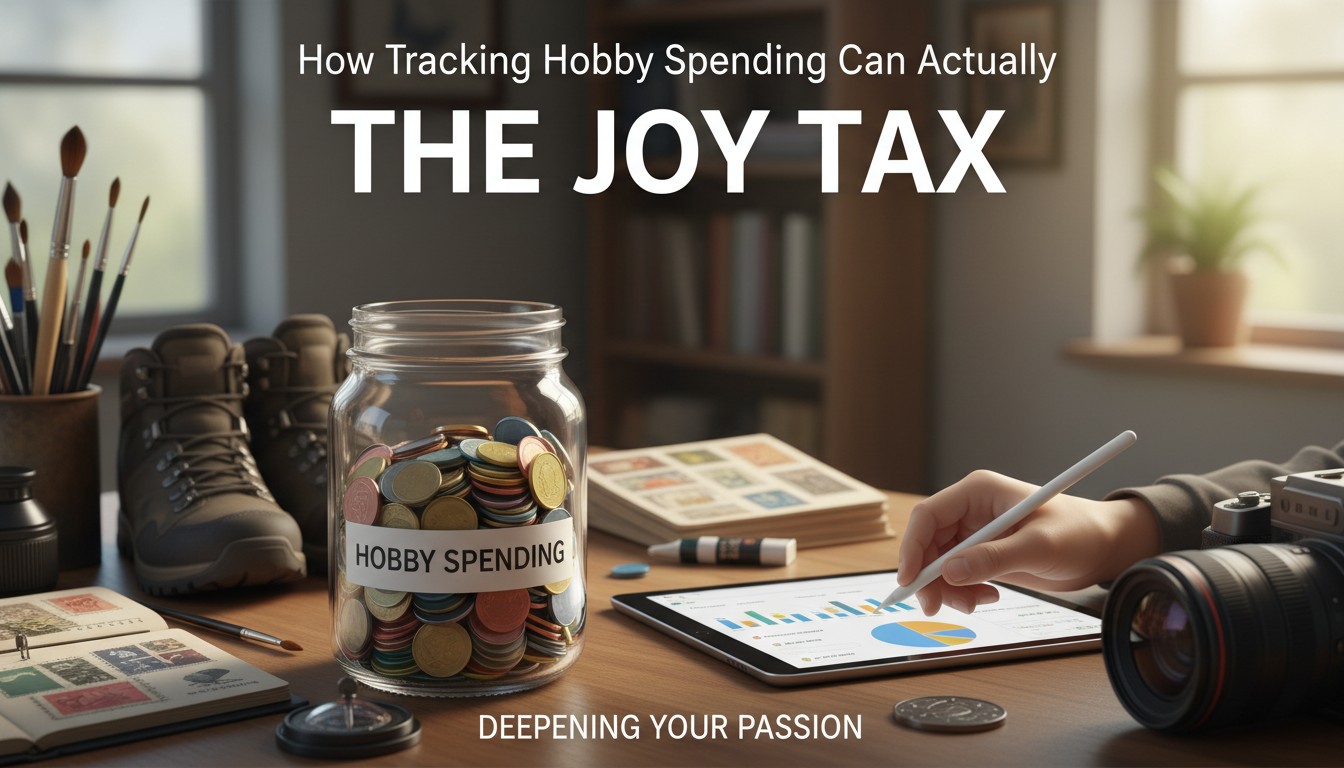
  • The Joy Tax: How Tracking Hobby Spending Can Actually Deepen Your Passion

    The Joy Tax: How Tracking Hobby Spending Can Actually Deepen Your Passion

    You stand at the craft store checkout with $87 worth of yarn you don’t remember picking up. The dopamine hit is immediate—those colors! that texture!—but by the time you’re home, guilt has settled like dust. You hide the receipt from your partner. You stash the yarn in the back of the closet. Your hobby, which should be your sanctuary, has become your secret shame. This is the insidious way financial fog transforms passion into paranoia.

    The psychology of hobby spending is a paradox: we pursue our passions to escape the transactional nature of daily life, yet unchecked spending turns those passions into sources of financial anxiety. Research from financial behavior studies reveals that 73% of hobbyists report feeling guilty about their spending, while only 19% have any systematic tracking method. We acquire supplies, experiences, and gear faster than we account for them, and the result is a creeping financial overwhelm that transforms sanctuary into stress.

    This awareness gap creates a silent thief: the very activities meant to bring joy become sources of shame and secret-keeping. While we meticulously research the perfect lens or the rarest yarn colorway, we devote almost no energy to the architecture of intentional spending. Understanding how to track hobby expenses—learning to observe without judging—transforms your relationship from anxiety-ridden avoidance to empowered participation.

    The Invisible Architecture: How Hobby Spending Becomes Financial Fog

    Every hobby rests on a foundation of invisible spending patterns. The $12 monthly subscription, the $8 skein of yarn bought weekly, the “occasional” $50 workshop—these aren’t random splurges but a predictable system of micro-transactions that most hobbyists fail to aggregate. Financial planners call this “death by a thousand cuts,” where small, enjoyable purchases become a hemorrhaging budget line item you never see coming.

    Consider the simple mathematics of the modern knitter. A pattern ($8), yarn for that pattern ($47), needles you don’t have ($14), and a notions pouch you convince yourself you need ($22) equals $91 for a single project. Two projects per month is $182. That’s $2,184 annually—roughly the cost of a vacation you won’t take because you “can’t afford it.” Yet because each purchase feels isolated and justified, the cumulative impact remains invisible until the credit card statement arrives as an ambush.

    The materials of tracking create similar invisible impacts. A hobbyist who uses a generalized budgeting app sees their hobby spending scattered across “shopping,” “entertainment,” and “miscellaneous,” making the true cost impossible to track. Another who opens a separate “fun fund” account with automated weekly transfers creates a clear boundary that actually enhances enjoyment . These choices ripple through your financial confidence, affecting not just your budget but your sense of control and your ability to invest in bigger, more meaningful hobby experiences.

    The cumulative effect of these micro-decisions creates macro-outcomes. Hobbyists with intentional tracking systems report higher satisfaction with their purchases and less guilt. Those without tracking often abandon hobbies altogether when the financial stress becomes overwhelming. The difference isn’t the size of the hobby budget—it’s the presence of financial visibility.

    The Spending Visibility Matrix: What You’re Actually Spending

    Visible Spending: Large purchases over $100 that you consciously budget for

    Gray Spending: $20-100 purchases that feel justified in the moment but accumulate

    Invisible Spending: Subscriptions, supplies, micro-purchases under $20 that fly under radar

    Shadow Spending: Indirect costs—storage, maintenance, tools you buy “just in case”

    The Psychology of Financial Fog: Why We Avoid Tracking Hobby Spending

    If tracking is so obviously beneficial, why do we resist it? The answer lies in a combination of cognitive biases, emotional associations, and a misunderstanding of money’s role as a tool rather than a judge.

    Money Guilt: The Moralization of Purchases

    We assign moral value to spending categories, treating hobby purchases as “frivolous” despite their proven mental health benefits . This creates a shame spiral: you buy supplies, feel guilty, avoid tracking because tracking would confirm your “bad” behavior, then spend more to soothe the guilt. The solution is reframing: money is a neutral tool for building a life aligned with your values, not a scorecard of virtue .

    Optimism Bias: “This Will Be the Last Purchase”

    Hobbyists chronically underestimate future spending, believing each purchase completes their needs. The knitter buys skein #47 convinced this is the final color needed. The photographer buys the “perfect” lens certain no other gear is required. This bias serves as a permission structure for unlimited spending because each transaction feels final. Tracking shatters this illusion by revealing the pattern of “just one more.”

    The Scarcity Loop: FOMO-Driven Acquisition

    Limited edition drops, discontinued yarn bases, flash sales—the hobby economy runs on artificial scarcity that triggers our primal acquisition instincts. Tracking spending feels like punishing yourself for responding to these manufactured urgencies. But the conscious spending plan reframes tracking as empowerment: when you know your “fun money” allocation, you can participate in these drops without anxiety .

    Cognitive Bias How It Sabotages Tracking Mindful Tracking Solution
    Money Guilt Assigns moral value, creates shame spiral Reframe as values alignment, not virtue signaling
    Optimism Bias Believes each purchase is the “last one needed” Track to reveal patterns, not judge individual purchases
    Scarcity Loop FOMO-driven purchases feel justified in the moment Create a “fun fund” that allows participation without anxiety
    Confirmation Bias Only remembers “good” purchases, forgets regrets Photograph every purchase for 30 days to create objective record
    Present Bias Prioritizes immediate hobby gratification over long-term goals Automate savings for big hobby goals to satisfy future self

    Values-Based Tracking: The Framework That Enhances Joy

    The secret to tracking without killing joy isn’t tracking less—it’s tracking more intentionally. The “passion budgeting” framework reframes tracking as a tool for amplifying what matters, not restricting it.

    The Money Dials: Identifying What Actually Brings Joy

    Not all hobby spending is equal. Some purchases provide lasting satisfaction; others deliver fleeting dopamine that quickly turns to regret. The “money dials” concept asks you to identify the 2-4 categories where spending genuinely enhances happiness . For a knitter, it might be high-quality natural fibers and patterns from indie designers. For a photographer, it might be workshop experiences rather than gear. Once identified, you can ruthlessly cut spending in non-dial categories to fund what truly matters.

    The Fun Fund: Separate But Equal

    The most powerful tracking hack is to create a separate checking or savings account exclusively for hobby spending . Automate a weekly or monthly transfer based on your conscious spending plan . When the money is in that account, it’s guilt-free. When it’s gone, it’s gone. This physical separation transforms abstract budget numbers into tangible reality. You can’t overspend accidentally because the financial boundary is absolute.

    The Purchase Pause: Creating Space for Intention

    Implement a mandatory 24-hour pause for any purchase over a set threshold ($50 is a good starting point). During that pause, you must document: what it is, why you want it, and which “money dial” it serves. This simple act of writing creates a moment of consciousness that eliminates 60-70% of impulse buys without feeling restrictive. You’re not saying “no”—you’re saying “let me think about it,” which preserves autonomy while reducing regret.

    The Conscious Spending Plan: The Anti-Budget Budget

    Fixed Costs (50-60%): Rent, utilities, groceries, insurance—non-negotiables

    Investments (10%): 401(k), IRA—your future self’s hobby fund

    Savings (5-10%): Emergency fund, big hobby goals

    Guilt-Free Hobby Spending (20-35%): This is your fun money, to be spent joyfully without tracking every penny

    Real-World Transformations: From Financial Fog to Clarity

    The abstract becomes concrete through examples. These case studies demonstrate how ordinary hobbyists transformed their relationship with spending through intentional tracking systems.

    The Impulse Yarn Collector

    Sarah, a 34-year-old teacher, was spending $350/month on yarn but had three sweaters worth of unused skeins in her closet. Her breakthrough was creating a separate “yarn fund” checking account with a $100/month automatic transfer. When the account is empty, she can still browse and save items to a wishlist, but can’t purchase. “The waiting became part of the pleasure,” she says. “I now plan projects around what I can afford, and each purchase feels intentional instead of impulsive.” Her WIP (work-in-progress) pile dropped from 23 to 7 projects, and her enjoyment of knitting actually increased.

    The Tech Upgrade Addict

    Marcus, a photographer, was trapped in the upgrade cycle—every new camera release felt essential. He started photographing every gear purchase and posting it to a private Instagram with the caption: “What this cost, what I hoped it would solve, what it actually solved.” Within six months, he recognized the pattern: new gear provided a two-week novelty high, then the same creative frustrations returned. He shifted his “money dial” to workshop experiences and mentorship. His gear spending dropped 75%, while his skill-based satisfaction soared. Tracking didn’t restrict him; it revealed what actually mattered.

    The Experience Maximizer

    Ava, a music lover, was spending $600/month on concerts but constantly felt guilty about neglecting her savings. Her solution was a “fun fund” savings account that received $500/month auto-transfer. Concert tickets come from this account only. The twist: she also tracks every show in a journal—setlist, venue, who she went with, how it made her feel. The combination of financial boundaries and experiential documentation transformed her spending from “impulsive splurging” to “curated life collection.” Her savings grew by $400/month while her concert attendance stayed the same; the only thing that changed was her feeling of control.

    Hobby Profile Problem Pattern Tracking Solution Outcome
    The Impulse Yarn Collector $350/month on impulse purchases, 23 WIPs Separate “yarn fund” account, $100/month limit WIPs dropped to 7, enjoyment increased
    The Tech Upgrade Addict Endless gear upgrades, creative frustration persists Photograph + journal every purchase’s actual ROI Spending dropped 75%, satisfaction rose
    The Experience Maximizer $600/month concerts, constant guilt $500/month fun fund + concert journal Saved $400/month, guilt eliminated
    The Weekend Warrior $200/month on random hobby supplies, none used 72-hour purchase pause + project portfolio Spending redirected to one meaningful hobby

    Practical Strategies: Your 30-Day Tracking Blueprint

    Understanding the theory is useless without implementation. Here is a concrete, four-week plan for transforming your hobby spending from invisible fog to intentional clarity.

    Week 1: The Awareness Audit (No Judgment Allowed)

    Gather every bank and credit card statement from the past three months. Without analyzing or justifying, create a simple spreadsheet with three columns: Date, Amount, Vendor. Every single hobby-related purchase gets logged, even that $2.99 pattern PDF. The rule: no categories, no judgment, just data. This mechanical act removes emotion and creates objective evidence. You’ll likely discover you’re spending 30-50% more than you assumed—a necessary shock to break through optimism bias.

    Week 2: Values Clarification and Account Creation

    Review your audit and identify your “money dials”—the 2-4 categories that genuinely enhance your hobby joy . For everything else, you’re now on a spending freeze. Simultaneously, open a separate checking account labeled “Hobby Fund” . Calculate 20% of your take-home pay (or whatever fits your budget) and set up an automatic weekly transfer. This physical separation is transformative: money in this account is morally neutral, free to be spent without guilt.

    Week 3: The Purchase Pause Protocol

    Implement the 72-hour pause for any purchase over $50. Create a simple note on your phone: “Item, Cost, Why I Want It, Which Money Dial It Serves.” During the pause, you can continue browsing and even add to cart, but you cannot buy. About 60% of items will lose their appeal within 24 hours. For the remaining 40%, you make the purchase from your Hobby Fund knowing it’s intentional, not impulsive.

    Week 4: Automation and Documentation Ritual

    Set up one automation: direct deposit splitting your paycheck so Hobby Fund money never touches your main account. Then create a simple documentation ritual: a five-minute weekly review where you look at your Hobby Fund balance, log any purchases, and write one sentence about what you created that week. This ritual transforms tracking from a chore into a celebration of productivity. The balance becomes a measure of possibility, not restriction.

    The Tracking Flow: Weekly Five-Minute Ritual

    Step 1: Check Hobby Fund balance (30 seconds)

    Step 2: Log any purchases from the week (2 minutes)

    Step 3: Write one sentence about what you created (1 minute)

    Step 4: Adjust next week’s allocation if needed (1 minute)

    Step 5: Close app and enjoy your hobby without guilt

    Your Hobby Deserves Financial Oxygen, Not Suffocation

    The yarn, the camera gear, the concert tickets—they’re not frivolous indulgences to be hidden in shame. They’re investments in your mental health, your creative expression, your identity. But they can’t serve that purpose when they’re tangled in a web of financial anxiety and secret-keeping. Tracking your hobby spending isn’t about restriction; it’s about liberation. It’s about giving yourself permission to spend joyfully because you know exactly what you can afford.

    Your power to enjoy your hobby without financial guilt doesn’t depend on earning more or having a smaller passion. It depends on one thing: visibility. When you know where your money is going, when you’ve identified what truly brings you joy, when you’ve created boundaries that protect your financial health while honoring your creative needs—you become unstoppable. The tracking becomes a ritual of self-awareness, not self-punishment.

    Start small. Log one week of spending. Open one separate account. Implement one purchase pause. Your journey from financial fog to clarity begins with a single act of observation—and where it leads is a life where your hobbies and your bank account thrive in harmony, each feeding the other, neither starving the soul.

    Key Takeaways

    Most hobbyists underestimate spending by 30-50%; tracking reveals the true cost and transforms anxiety into control.

    Cognitive biases like money guilt and optimism bias sabotage tracking; reframe money as values-alignment tool, not moral scorecard.

    The most effective system is a separate “fun fund” account with automated transfers—spending from this account is guilt-free by design.

    Implement a 72-hour purchase pause for items over $50, combined with documenting the “why”—this eliminates 60% of impulse buys without feeling restrictive.

    Anyone can build a sustainable tracking system through a 30-day plan: audit, create separate account, implement pause protocol, and establish a weekly five-minute ritual.