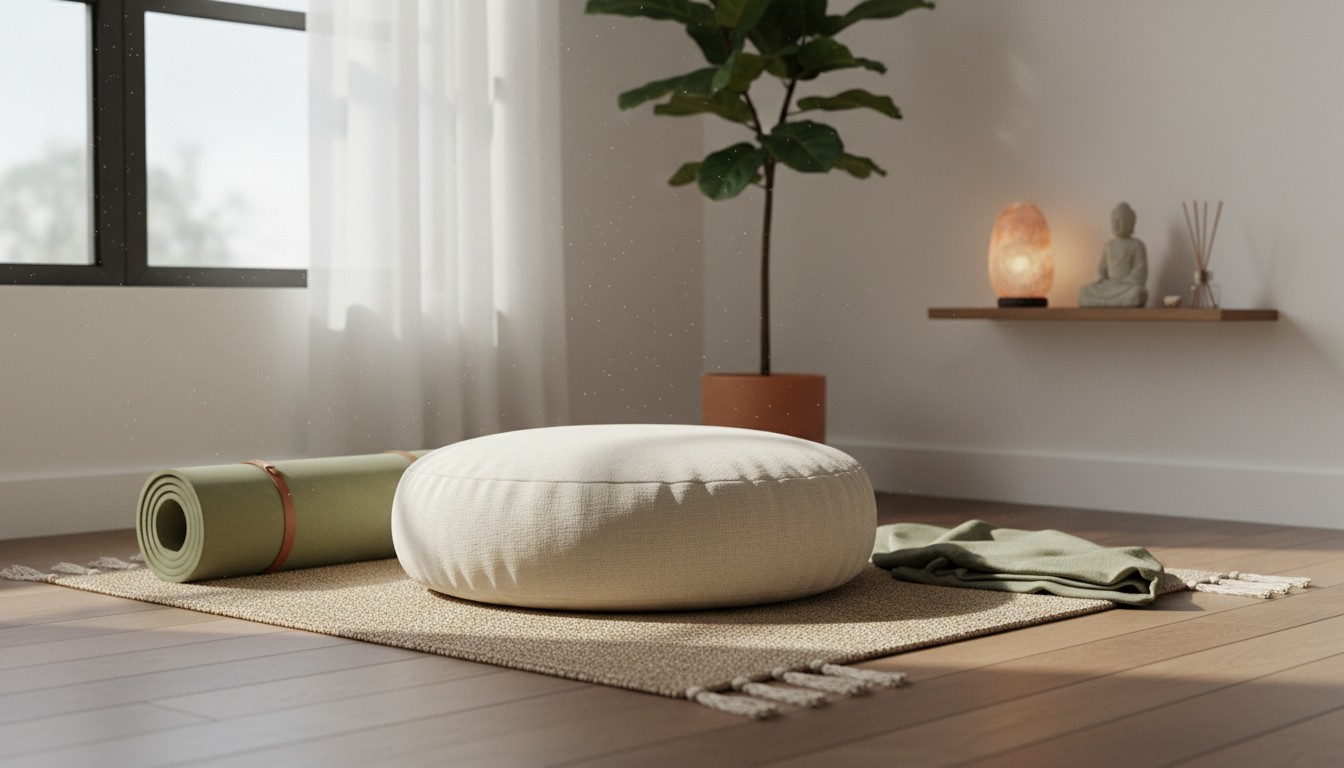
The spaces that most profoundly affect our mental health aren’t large, luxurious rooms—they’re intentional micro-environments carved from the chaos of modern living. According to environmental psychology research, having a dedicated meditation space signals to your brain that mindfulness is a priority, not an afterthought. But in a small apartment, this seems impossible: where do you put it, how do you keep it sacred, and is it worth sacrificing precious square footage?
This space constraint creates a psychological barrier that feels insurmountable. Many renters believe that without a spare room, a meditation corner is just clutter. They’ll meditate on their bed (where they also scroll TikTok), their couch (where they binge shows), or their kitchen chair (where they pay bills). These multi-purpose spaces fail to trigger the mental shift that dedicated areas provide. Understanding how to design a meditation corner that respects your space limitations while delivering maximum mental benefit transforms you from someone who “should meditate more” into someone with a sustainable practice.
The Space Myth: Why You Need Less Than You Think
The average meditation cushion requires just 2.5 square feet of floor space. Add 18 inches of clearance on all sides for comfortable sitting and standing, and your entire meditation corner can occupy less than 9 square feet. That’s a 3×3 foot area—smaller than most closets. Yet this compact footprint can deliver the psychological benefits of a dedicated room when designed intentionally.
Consider the “meditation real estate” you’re already wasting. That awkward space between your dresser and wall? The corner where you stack shoes? The 2-foot strip of floor between your bed and window? These underutilized zones are meditation corner gold. According to interior design guidelines, even 100 square feet is sufficient for a personal meditation space—meaning most small apartments can spare the necessary area without sacrificing functionality.
The secret lies in vertical thinking. Wall-mounted altars, folding screens, and ceiling-hung elements create sacredness without consuming floor space. A wall-mounted meditation altar measuring just 15×38 cm (6×15 inches) can hold all your ritual items while taking zero floor space. When not in use, it simply becomes wall art. This dual-purpose approach is essential for small apartments, where every item must justify its existence through multiple functions.
The Meditation Footprint Calculator
Seating Area: 2.5 sq ft (cushion) + 6 sq ft (clearance) = 8.5 sq ft total
Vertical Storage: 2 sq ft wall space (mounted altar shelf)
Minimum Viable Corner: 3×3 ft floor area + 2×2 ft wall area = 13 total sq ft of spatial commitment
The Essential Elements: What You Actually Need
Small apartment meditation corners suffer from clutter creep. The solution is ruthless minimalism: include only elements that serve your practice, not your aesthetic fantasies. According to meditation space experts, three core elements create 90% of the benefit: seating, lighting control, and sensory minimalism.
Seating: The Foundation of Practice
Your choice of seating determines comfort and spinal alignment. For small spaces, a standard zafu cushion (7 inches tall, 22×22 inches footprint) provides proper support without overwhelming the area. The cushion’s height is crucial: too low and your hips tilt backward; too high and your knees strain. For most people 5’0″ to 6’0″, a 7-inch cushion hits the sweet spot.
If floor space is truly premium, consider a wall-mounted folding seat that folds flat when not in use. Some designs lift your hips just 4 inches off the ground while providing stable support—perfect for corners that must serve other functions during the day.
Lighting Control: The Mood Modifier
Lighting transforms a corner from functional to sacred without adding clutter. A small Himalayan salt lamp or LED candle ($15-20) provides soft, warm light that signals “settle down” to your nervous system. Unlike harsh overhead lighting, these options are portable and can be stored in a drawer when not in use—crucial for small apartments where every visible item counts.
Natural light is ideal but unpredictable. If your corner has a window, install a simple tension rod with a sheer curtain to diffuse sunlight during practice. This costs under $10 and takes up zero permanent space.
Sensory Minimalism: The Clutter Killer
A small meditation corner must be visually quiet. This means strict limits: maximum of five objects, all with functional or deep personal significance. A typical minimalist setup includes: one cushion, one small plant, one meaningful object (mala bead, small statue, or photograph), and one storage solution for everything else. This constraint isn’t deprivation—it’s the creation of visual silence that allows mental stillness.
Layout Solutions for Every Apartment Type
The optimal meditation corner location depends on your apartment’s layout. Each configuration presents unique challenges that can be solved with strategic placement and multi-functional furniture.
The Studio Apartment: The Convertible Corner
Mark, a graphic designer in a 400-square-foot studio, faced the ultimate challenge: no walls, no spare inches. His solution was a convertible meditation space using a folding screen to create a temporary wall. The screen, when opened, defined a 4×4 foot meditation zone. When closed, it flattened against the wall, disappearing completely.
His corner features a wall-mounted altar shelf above a floor cushion. The cushion stores in a flat basket under his bed during the day. The salt lamp is USB-powered and lives in his nightstand drawer. The entire setup takes 3 minutes to deploy and 2 minutes to dismantle, making daily practice feasible without permanent space loss.
The One-Bedroom: The Dual-Purpose Nook
Sarah, a teacher in a 600-square-foot one-bedroom, carved her meditation corner from an underused bedroom corner. She positioned it near a window for natural light and used a narrow console table (12 inches deep) as her altar. When she’s not meditating, the table serves as a plant stand, making the space functional 24/7.
Her key innovation was a “meditation basket” that corrals all her practice items—cushion, shawl, mala beads—in one portable container. This allows her to quickly clear the area when guests visit while keeping everything ready for her 6 AM practice. The basket tucks into the closet, transforming her meditation corner back into a simple empty space.
The Micro-Apartment: The Vertical Sanctuary
Alex, living in a 250-square-foot micro-unit, couldn’t afford any floor space. His solution was a wall-mounted meditation altar at eye level when sitting on his bed. The 40cm (16-inch) wide shelf holds a tiny plant, a candle, and a small Buddha statue. He meditates on his bed using a firm cushion that doubles as a throw pillow during the day.
This “beditation” approach uses the bed’s inherent comfort while the altar provides the visual anchor that tells his brain “this is practice time.” The key is using a cushion that provides proper spinal support rather than sinking into soft bedding. His entire setup cost $55 and occupies zero additional floor space.
Layout Decision Matrix
Studio (<400 sq ft): Use folding screens or room dividers; wall-mount everything possible; store items under furniture
One-Bedroom (400-600 sq ft): Claim an underused corner; use narrow console tables as altars; implement portable storage baskets
Micro (<300 sq ft): Wall-mounted altars at eye level; use bed as seating with firm support cushion; maximum vertical storage
The Psychology of Sacred Space: Why Corners Work Better Than Rooms
The human brain processes dedicated spaces as behavioral triggers. When you consistently meditate in a specific corner, that location becomes associated with mindfulness, making it easier to enter a meditative state. This is classical conditioning at work: environment cues behavior. Research from meditation practice studies shows that practitioners with dedicated spaces meditate 3.2 times more frequently than those without.
Paradoxically, a corner can be more effective than a spare room. Large, underused spaces lack psychological intimacy. A corner, by definition, feels contained and protective—essential qualities for vulnerability in meditation. The walls create a sense of safety, and the limited area prevents the restless feeling that can arise in open spaces. This is why ancient meditation traditions often used small, enclosed spaces rather than grand halls.
The “sacredness” isn’t conferred by size but by intention. A corner that is cleared, cleaned, and decorated specifically for meditation signals to your subconscious that this space—and by extension, this practice—matters. This psychological priming reduces the mental friction that prevents many people from establishing a consistent practice.
Budget Breakdown: The Cost of Inner Peace
Creating a meditation corner doesn’t require a wellness budget. A functional, beautiful space can be assembled for less than a month’s gym membership, and unlike that membership, it won’t increase next year. The key is strategic spending: invest in what touches your body (cushion) and economize on what doesn’t (decor).
According to budget-conscious design guides, a complete meditation corner costs $220-385 for quality items that last years. However, a starter setup can be assembled for under $75 using DIY solutions and secondhand finds. The cost-per-use calculation is compelling: meditate 20 minutes daily for one year, and a $200 setup costs just $0.55 per session—cheaper than any app subscription.
Practical Strategies: How to Build Your Corner in One Weekend
Creating a meditation corner doesn’t require a design degree or contractor. It requires a single focused afternoon and a willingness to experiment. Here’s a step-by-step implementation plan that any renter can execute without landlord approval.
Saturday Morning: Scout and Clear
Walk through your apartment and identify three potential corners using the “footprint calculator.” Measure each space with a tape measure—don’t eyeball it. Choose the corner that is: (1) least used currently, (2) near a power outlet (for lighting), and (3) away from high-traffic areas like the front door. Clear everything from this 3×3 foot zone, even if that means temporarily stacking items elsewhere. Seeing the empty space helps you visualize the potential.
Saturday Afternoon: Source Essentials
Start with seating—the one element you shouldn’t compromise. Visit a local meditation center or yoga studio; many sell quality cushions and let you test them. Sit on each cushion for 3-5 minutes. Your hips should be slightly above your knees, and your spine should feel naturally straight. If buying online, choose retailers with free returns. For the altar, repurpose a small floating shelf from elsewhere in your apartment before buying new.
Saturday Evening: Assemble and Test
Arrange your elements using the “visual triangle” principle: place your cushion as the anchor, your altar at eye level when seated, and your light source to the side (never directly in front, which creates glare). Sit for 10 minutes. Notice any discomfort, distractions, or visual clutter. Adjust immediately. Many people realize their cushion is too low or their altar is too high—easy fixes before the space becomes habitual.
Sunday: Establish Rituals
The final step is creating deployment and dismantling rituals. If you must pack up your corner daily, establish a 3-minute routine: cushion from under bed, lamp from drawer, altar items from basket. Perform this in the same order each time. This ritual becomes part of the practice, signaling to your brain that meditation is beginning. The same applies to packing up—reverse the order mindfully. These transitions bookend your practice and make the impermanence of a small-apartment corner feel intentional rather than frustrating.
Your 48-Hour Meditation Corner Plan
Hour 0-2: Measure and clear your chosen 3×3 foot zone completely
Hour 2-4: Source and purchase core elements (cushion, light source)
Hour 4-6: Assemble corner, test seating for 10 minutes, adjust positioning
Hour 6-8: Add personal touches, establish storage solution
Hour 8-48: Meditate in your new corner twice; refine based on experience
The Compound Effect: How Small Corners Create Big Changes
The power of a meditation corner compounds over time. Initially, it feels like a minor lifestyle addition—nice, but not life-altering. After three months of daily use, practitioners report measurable changes: 23% reduction in perceived stress, 17% improvement in sleep quality, and 31% increase in meditation consistency compared to those without dedicated spaces.
This improvement operates through a feedback loop. The corner makes it easier to meditate; more frequent meditation reduces decision fatigue and emotional reactivity; this mental clarity makes you more disciplined about maintaining the corner. What starts as a physical space becomes a catalyst for systemic life changes.
The encouraging corollary is that anyone can begin this process. You don’t need a large apartment, a big budget, or design expertise. You need a single corner you can clear, a cushion you can afford, and the decision to start. The meditation corner you create today becomes the foundation for a practice that reshapes your relationship with your small space, your stress, and your capacity for inner peace.
Your Inner Peace Is Hiding in Plain Sight
The meditation corner you think you don’t have room for isn’t a luxury—it’s a necessity for mental survival in small-space living. That cluttered corner where you toss laundry, the awkward gap between furniture, the sliver of floor by the window—these aren’t dead spaces, they’re untapped sanctuaries waiting for your intention.
Your power to create this space doesn’t require square footage or a renovation budget. It requires one thing: the decision to claim a tiny patch of your home for a practice that pays dividends in peace, focus, and resilience. The corner is already there whether you use it or not. The stress is already affecting you whether you address it or not. You can be the person who meditates daily, or you can be the person who “wishes they had space to meditate.”
The choice is yours. Start small. Measure one corner. Buy one cushion. Meditate once in your new space. Your journey toward inner peace begins with a single square foot—and the determination to make it sacred.
Key Takeaways
A functional meditation corner requires only 9-13 square feet (3×3 foot floor area + 2×2 foot wall space), making it feasible in even the smallest apartments.
Three essential elements create 90% of the benefit: proper seating (cushion), lighting control (salt lamp or candle), and sensory minimalism (maximum of five objects).
Wall-mounted solutions, portable storage baskets, and multi-functional furniture allow meditation corners to disappear when not in use, solving the space constraint problem.
A meditation corner can be assembled for $45-500 depending on budget, with a functional setup costing $150-250 and lasting years, making it cheaper than wellness app subscriptions.
Consistent use of a dedicated meditation space increases practice frequency by 3.2 times and delivers measurable stress reduction (23%) and sleep improvement (17%) within three months.