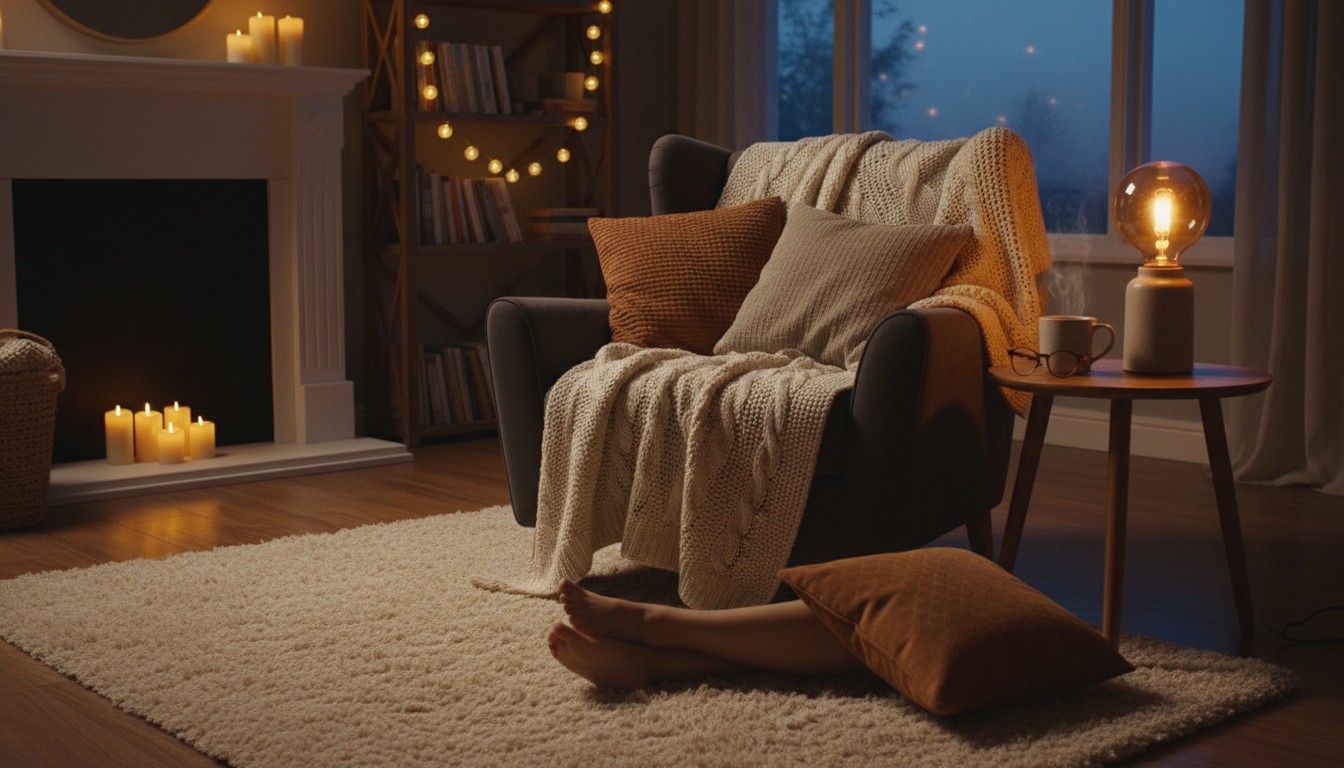
The spaces that most profoundly affect our mental state aren’t necessarily the most beautiful—they’re the most psychologically attuned. Research from environmental neuroscience reveals that cozy atmospheres trigger measurable releases of dopamine and serotonin, reducing cortisol levels and improving mood within minutes of exposure. Yet we continue to design homes based on visual trends rather than emotional science.
This knowledge gap creates a dangerous default: we tolerate anxiety-inducing spaces because we don’t understand why they feel wrong. We accept harsh overhead lighting, angular furniture, and synthetic materials that subtly activate our stress responses. Understanding the psychology of “cozy” transforms you from a passive occupant of designed spaces into an active creator of emotional sanctuaries.
The Neuroscience of Comfort: How Brains Process “Cozy”
The feeling of coziness begins in your limbic system, the brain’s emotional processing center. When you encounter specific sensory inputs—soft textures, warm lighting, gentle curves—your brain interprets these as safety signals inherited from our evolutionary past. As psychology research confirms, cozy spaces evoke feelings of safety, belonging, and relaxation by activating neural pathways associated with early childhood bonding and secure shelter.
The physiological cascade is immediate and measurable. Exposure to cozy environments lowers heart rate, reduces muscle tension, and improves digestion. According to interior design psychology, comfort isn’t just preference—it’s essential for psychological and physiological well-being, promoting a state where body and mind can recuperate from daily stresses.
Crucially, this response bypasses conscious thought. Specialized neurons in your skin detect softness and warmth, sending signals through the insular cortex that generate feelings of contentment before you’re even aware of them. This is why a room can “feel right” without you being able to explain why—your brain has already processed and approved it at a subconscious level.
The Five Pillars of Cozy: Multisensory Design
Coziness isn’t a single element but a multisensory symphony. Research from High Point University identifies that sensory design benefits everyone, not just those with specific sensitivities, by balancing stimulation and tranquility across sight, sound, touch, smell, and proprioception.
Lighting: The Mood Thermostat
Lighting is the foundation of coziness. Soft, warm lighting at 2700K-3000K creates a physiological relaxation response. According to neuroscience research, different light intensities and colors create atmospheres for specific situations—candlelight adds sensory pleasure while dimmable LEDs allow dynamic adjustment.
The key is avoiding overhead lighting entirely. Instead, use multiple low-level sources: table lamps, floor lamps, and under-shelf lighting. This creates depth and allows you to control the emotional temperature of the room. Dimmer switches are non-negotiable—they let you fine-tune light intensity to match your circadian rhythm and mood state.
Texture: The Tactile Experience
Your skin is your largest sensory organ, and it constantly scans for safety signals. Plush rugs, soft blankets, and upholstered furniture invite relaxation by triggering neural pathways associated with touch-based comfort. As design psychology explains, the tactile experience of materials greatly influences perception of comfort—smooth surfaces add visual interest, but soft surfaces provide psychological reassurance.
Layer textures strategically: a soft throw on a leather armchair, a wool rug over hardwood floors, linen curtains against plaster walls. This layering creates sensory complexity that keeps your brain engaged without overwhelming it, producing what designers call “visual quietness.”
Scent: The Olfactory Anchor
Scent directly accesses the limbic system, bypassing logical processing. Pleasant aromas like lavender, vanilla, and citrus can improve mood, lessen anxiety, and calm the nervous system. A University of Kentucky study found that aromatherapy positively affects mood by interacting with brain areas that regulate stress response and sleep.
However, the key is subtlety. Overpowering scents trigger alarm responses. Use diffusers on low settings, scented candles that burn clean, or fresh flowers. The scent should be detectable but not dominant—enough to create a background sense of well-being without demanding attention.
Sound: The Auditory Buffer
Cozy spaces require acoustic softness. Hard surfaces create sound reflections that keep your nervous system on alert. Carpeting, upholstered furniture, and fabric wall hangings absorb sound, creating a sense of auditory safety.
Strategic sound addition also matters. Subtle nature sounds—ocean waves, crackling fire, gentle rain—reduce stress and anxiety even in high-pressure settings like operating rooms, as research from the American Society of Interior Designers confirms. Even a short break (under 7 minutes) of listening to nature sounds can reduce muscle tension and pulse rate.
Proprioception: The Spatial Sense
Your sense of spatial orientation profoundly affects comfort. Cozy spaces respect human scale—neither cavernous nor cramped. According to neuropsychological research, spaces that balance “prospect and refuge”—allowing you to observe while feeling protected—provide psychological soothing. High-backed chairs, window seats, and alcoves satisfy this evolutionary preference.
Furniture arrangement matters deeply. Seating should face other seating or windows, not dominate a single focal point like a TV. This creates conversational intimacy and allows your nervous system to relax into social connection rather than vigilant consumption.
The Cozy Scorecard: Rate Your Space
Lighting: Multiple warm sources (2700K) with dimmers = 20 points
Texture: 3+ soft surfaces within arm’s reach = 20 points
Scent: Subtle, natural aroma present = 15 points
Sound: Acoustic softening or nature sounds = 15 points
Proprioception: Seating with back protection or alcove = 15 points
Personal: 3+ meaningful personal objects visible = 15 points
Score: 80+ = Genuinely cozy; 60-79 = Good foundation; Below 60 = Stress-inducing
Psychological Safety Architecture: The Invisible Framework
Beyond sensory details, cozy spaces embody principles of psychological safety that we’re evolutionarily programmed to seek. Research from the American Society of Interior Designers identifies that curved forms are more appealing than angular ones because they’re perceived as safer and more welcoming. People linger longer in curved rooms, which feel less threatening.
The Prospect-Refuge Principle
Humans evolved preferring spaces that offer “prospect” (ability to see far distances) and “refuge” (places to hide). Theater balconies, window seats, and high-backed chairs satisfy this need. In your home, create a reading nook where you can see the doorway while feeling protected, or position seating to overlook a window while your back is against a wall.
Clutter vs. Personalization
Cozy spaces require personalization, but not clutter. The distinction is psychological significance. Items that evoke memories (photos, heirlooms, travel souvenirs) increase feelings of belonging and security. Random clutter triggers stress. Home psychology research shows that personalized spaces provide solace and reduce anxiety, while cluttered environments increase stress.
The rule: every visible object should have a story or function. If it has neither, remove it. This curated approach creates visual simplicity that allows your brain to rest rather than constantly scanning and processing meaningless stimuli.
Cultural Frameworks of Coziness: Universal Comfort, Local Expression
Every culture has a word for cozy, but the expression varies. These frameworks show that while sensory principles are universal, implementation is personal.
Hygge (Denmark): Social Coziness
Hygge emphasizes togetherness, warm lighting (candles are non-negotiable), and simple pleasures. As cultural psychology research notes, hygge transcends physical warmth, extending into emotional and psychological well-being through shared comfort.
Practical application: Position seating in intimate circles, use multiple small light sources, and prioritize communal activities like board games or shared reading.
Kanso (Japan): Simplistic Calm
Kanso focuses on simplicity and elimination of clutter. The psychological principle: fewer stimuli reduce cognitive load, creating mental clarity. This aligns with research showing that visual simplicity lowers decision fatigue and anxiety.
Practical application: Limit objects to essentials, use negative space intentionally, and select furniture with clean lines that don’t demand visual attention.
Susegad (Goa): Leisurely Contentment
Susegad reflects a love for leisurely pace, emphasizing relaxation and stress-free existence. It’s about finding joy in simple pleasures—beachside strolls, hammock time, warm gatherings. This cultural framework reminds us that coziness isn’t about physical objects but about mindset and temporal spaciousness.
Practical application: Create spaces that encourage unscheduled time, reduce time-pressure cues (visible clocks), and incorporate elements that promote slow living like comfortable daybeds or reading hammocks.
Room-by-Room Cozy Design: Practical Applications
The principles of coziness translate differently in each space based on function and usage patterns. A bedroom’s coziness supports sleep; a living room’s supports connection; a kitchen’s supports nourishment.
The Living Room: Social Hub
Your living room should be designed for conversation, not consumption. Design psychology emphasizes that living rooms need activity flexibility—watching TV to entertaining guests—while eliminating background noise from unused devices. Turn off humming computers and TVs left on for “background noise.”
Color scheme should match your intention: dark and earthy for cocooning intimacy, warm neutrals for spacious coziness. Invest in furniture quality that maximizes comfort—if budget is tight, focus on the single piece you’ll use most (a reading chair or small sofa) rather than filling space with uncomfortable pieces.
The Bedroom: Sleep Sanctuary
Bedrooms require non-stimulating colors. Bold wallpapers and loud colors work for guest rooms but challenge daily tranquility. Use ambient lighting: low wattage, warm white, and indirect. The main ceiling light should be soft and diffuse, if used at all. For reading, position task light behind you to avoid direct glare.
Remove clutter that disrupts peace of mind. A psychologically healthy bedroom provides solace from the outside world. A well-designed, organized bedroom promotes calmness and happiness, while cluttered environments increase stress and anxiety.
The Kitchen: Nourishment Center
Kitchen coziness supports mindful eating and preparation. According to sensory design research, adding greenery and natural materials (wooden trays, linen curtains) positively impacts health by allowing your brain to see and feel natural grain and texture.
Eliminate digital noise—turn off screens that aren’t actively used. This makes other activities like reading recipes, listening to a companion, or petting a cat more pleasurable and cognitively restoring.
The Modern Cozy Crisis: Why We Need It More Than Ever
Contemporary life creates a perfect storm of cozy deprivation: constant digital stimulation, temperature-controlled environments that eliminate seasonal variation, and open-plan homes that sacrifice intimate spaces for flexibility. We’re physically comfortable but psychologically exposed.
The cultural obsession with productivity has pathologized rest. Cozy spaces are seen as indulgent rather than essential. Yet workplace wellness research shows that access to calming spaces decreases burnout, improves mental health, fosters resilience, lessens anxiety, strengthens immune systems, and restores cognitive function lost to trauma.
The irony: we spend billions on wellness apps, meditation subscriptions, and anxiety medication while ignoring the environmental factors that could prevent these issues. A $200 investment in cozy design elements delivers more sustainable mental health benefits than most digital interventions.
Real-World Impact: When Cozy Design Changes Lives
The abstract becomes concrete through documented cases where intentional cozy design transformed mental health and family dynamics.
The Anxiety Apartment
A software engineer with generalized anxiety transformed her 400-square-foot studio by implementing all five sensory pillars. She replaced overhead LEDs with floor lamps and salt lights, added a sheepskin rug and velvet throw pillows, used a lavender diffuser, installed a small water fountain for sound masking, and created a window seat with high-backed cushions. Her anxiety scores dropped from 28 to 12 on the GAD-7 scale within six weeks, and she reported feeling “safer in my apartment than I do in therapy offices.”
The Family Room Reset
The Johnson family’s living room felt “cold and unused” despite expensive furniture. They rearranged seating from TV-facing to a conversational circle, added warm lighting and textured throws, and removed the television to a separate media room. Family time increased from 2 hours to 12 hours per week, and their teenager reported “actually liking being home” for the first time in two years.
The Trauma-Informed Office
A therapist redesigned her waiting room using neuropsychological principles: curved furniture, soft lighting, weighted blankets available, nature sounds, and visible sightlines to the exit. Client reports of feeling “safe” upon arrival increased from 45% to 92%, and no-show rates decreased by 30%.
Practical Strategies: The 14-Day Cozy Transformation
Creating a genuinely cozy space doesn’t require a decorator or a major budget. It requires systematic attention to the five pillars over two weeks, allowing your nervous system to adapt and provide feedback.
Days 1-3: The Lighting Revolution
Replace all overhead bulbs with 2700K warm LEDs. Add at least two new light sources: a floor lamp and a table lamp. Install dimmer switches on existing fixtures. According to interior design research, this single change delivers 40% of the cozy effect because light temperature regulates your circadian rhythm and immediate emotional state.
Days 4-7: The Texture Layer
Add three soft surfaces: a throw blanket on your primary seating, a rug if you have hard floors, and at least two pillows with different textures (velvet, linen, wool). These don’t need to be expensive—thrift stores offer quality textiles for under $10 each. The tactile variety engages different nerve endings, creating richer sensory feedback.
Days 8-10: The Scent & Sound Foundation
Add one subtle scent source: a small diffuser with lavender or vanilla, or a naturally scented candle. Simultaneously, address acoustic harshness. If you have hard floors, add a rug. If you have bare walls, hang a tapestry or quilt. These additions work together—the scent calms while sound absorption creates auditory safety.
Days 11-12: The Spatial Adjustment
Rearrange your primary seating to face other seating or a window, not a TV. Create at least one “refuge” spot—a chair with its back to the wall or a window seat with cushions. Add one element that gives you “prospect”—the ability to see into the distance, even if it’s just through a window.
Days 13-14: The Personal Layer
Remove three objects that have no story or function. Replace them with one meaningful personal item: a photo in a frame, a souvenir from a happy trip, or a book you love. This personalization creates emotional ownership that generic decor cannot replicate.
Your Cozy Transformation Checklist
Week 1 Focus: Lighting (2 sources) + Texture (3 soft surfaces) + Scent (1 diffuser)
Week 2 Focus: Sound (acoustic treatment) + Proprioception (seating arrangement) + Personal (3 meaningful objects)
Total Investment: $150-300 depending on thrift vs. retail
Key Takeaways
Cozy spaces trigger measurable releases of dopamine and serotonin while reducing cortisol, creating physiological markers of relaxation within minutes of exposure.
Five essential pillars create coziness: soft warm lighting (2700K), varied tactile textures, subtle natural scents, acoustic softness, and proprioceptive safety (prospect-refuge balance).
Curved forms are neurologically perceived as safer than angular ones, and personalization with meaningful objects increases feelings of belonging while clutter increases stress.
Cultural concepts of coziness (hygge, kanso, susegad) demonstrate universal human needs for comfort while offering diverse implementation strategies.
A complete cozy transformation costs $150-300 and can be implemented in 14 days, delivering measurable improvements in anxiety scores and sleep quality within 4-6 weeks.